Articles: Dr. SANAT KAUL’s BLOG

VISITOR STAT

Tuesday, March 31, 2020

INDIA’s UNTAPPED STRATEGIC ASSETS: ANDAMAN & NICOBAR ISLANDS


Nicobar 1975-77: Nicobarese boys in a local dugout. 
Nicobars 1975-77 Pig Fight 3

Nicobars 1975-77 Pig Fight 

WRESTLING 

FOOTBALL GAME

Nicobars 1975-77 Pig Fight

Nicobars: 1975-77 Inter-village Boat Race
Nicobars: 1975-77 Boat Race from a distance

DOWNLOAD BOOK (PDF VERSION)

DOWNLOAD CLICK

Wednesday, March 25, 2020

COVID-19 & Aviation: Responsibility and liability of China


While we were reeling under the depressing state of the India aviation and the recent budget announced on 1st February 2020 which gave no relief to the Aviation sector, came the tsunami of Coronavirus or COVID-19 as it is called now from Wuhan in China which has shattered the world economy and in particular the Aviation sector. In fact, aviation is the main source of spread of this virus internationally from China. While China was in denial ever since mid-November 2019 and tried to contain it down at Wuhan city with orders to hush it up and not to publish any information on it, it was not till14th January when WHO announced it but gave no clear evidence. By then the damage was done internationally by the aviation sector as Wuhan is also well connected worldwide. Globalised aviation is mainly responsible for transmission of this virus. Only by 20th January 2020 did China admit that the virus was transmitted human to human. As a result the countries world wide started putting entry barriers to their country mainly through aviation. Most countries including India have now announced a complete lockdown.


There is no doubt that aviation today is a critical catalyst to globalisation and growth. Air connectivity is becoming more and more important. In fact besides passengers, air cargo carries around 30% of the world trade in value terms. However, when in November 2019 China found a virus spreading around Wuhan city in Hubei province, they tried to hush up. Unfortunately while this was being hushed up by China, it started to spread worldwide through airline passengers as there was no medical check on them. Only by mid-January the world was aware of this deadly virus and the obvious containment measure was to curtail aviation. Therefore, a sudden Tsunami hit the aviation sector worldwide leading to a clampdown on flights all over. According to IATA, the international Airline Association, International airlines could loose around $ 200 billion in the present year. In India also Aviation sector is reeling under a meltdown as India clamp downs completely on international and domestic flights. While one can appreciate the timely steps the Indian government has taken to stop the spread of this deadly virus, ,the government has to ensure that this vital infrastructure is not allowed to collapse.

One is reminded of 9/11 incident of terrorist attack through hijacking of aircrafts in the US in 2001 and their use as a weapon of mass destruction. The entire aviation industry worldwide collapsed even then. Calling it a catastrophic event , the world’s leading insurance companies suspended their insurance cover for airlines and all governments including Indian had to help their national Airlines through financial measures. The present crisis of COVID-19 is yet another catastrophic event occurring after 19 years through the aviation sector but with no fault of theirs and it’s important for government to come to the aid of this sector because it is the government that has grounded all air travel for good reasons.

The Chicago Convention 1944, is basis for creation of International Civil Aviation Organisation (ICAO) and Air Laws and is ratified by practically all the members of UN including China. Article 14 imposes on each member state the responsibility to take effective measures to prevent the spread by means of air navigation of cholera and such other communicable diseases and to that extent contracting state has the responsibility to keep in close consultation with agencies concerned with international regulation relating to sanitary measures applicable to aircraft. It has by now been well established that China had purposely kept quiet of COVID-19 virus in early stages leading to spread of this deadly virus globally. There is, therefore a clear case of default by China due to its deliberate and irresponsible behaviour causing immeasurable loss to so many persons by reasons of death and hospitalisation and its spread all over the world. It has also caused extreme losses to countries who had to take extreme preventive measure to stop the spread of virus. It has caused loss to nearly all Airlines worldwide due to stoppage of their operations by their countries. Had they informed ICAO on time this spreading would not have occurred . It is, therefore, a fit case for settlement of a dispute under Article 84/85/88. Further, under Montreal Convention 1999( which replaces the Warsaw System) the liability of the of carrier starts when an emplaning passengers crosses security or a deplaning passengers leaves security of an airport. In an unfortunate accident in Delhi’s IGI airport in 1999 when a 12 year old girl was killed due to an accident in the escalator, the Supreme Court of India in 2008 awarded a fine/ penalty on the Airports Authority of India under the Warsaw System ( as India had not ratified the Montreal 1999 Convention then). Similarly, in the present case, Wuhan Airport is liable under Article 17 of the Montreal Convention 1999 read with Article 14 of the Chicago Convention 1944 mentioned above for damage sustained by so many international passengers of various nationalities of permitting passengers board without screening of the COVID-19 and spreading it across the world due to utter negligence of the Wuhan Airport Authorities, an airport owned by the Government of China and thereby the Chinese Government . It’s a fit case for Class Action suit also on a world wide basis under Montreal Convention 1999. It may be added further that World Health Organisation (WHO)’s initial endorsement of the Chinese claim in that this virus gave no evidence of human to human transmission is now being questioned as a case of successful Chinese influencing of a multi-lateral Organisation to its national advantage as part of Chinese strategy to infiltrate multilateral organisations. While two decades back when SARS crisis took place in China it was WHO that issued the first travel advisory. Now, with growing financial clout of China and its political support and backing of the current Director General Tedros Adhanom in his election in 2017, the independent role of WHO could have been undermined! Incidentally, the Secretary General of ICAO is also Chinese.

Dr Sanat Kaul is Chairman of International Foundation for Aviation, Aerospace and Drones. He can be contacted at sanatkaul@gmail.com

Wednesday, March 18, 2020

Burying Alive: Strange case of Idu Mishi tribe of Arunachal Pradesh

IDU MISHI TRIBE - ARUNACHAL PRADESH
In a recent article by Allison C. Meier ,”Fear of being Buried Alive” it was stated, ‘Anxiety over being buried alive dates back centuries. Roman author Pliny the Elder remarked: Such is the condition of humanity, and so uncertain is mens judgment, that they cannot determine even death itself.” Declaring if someone is dead has not always been easy. There is still debate today over when legal death” occurs, as the brain can stop functioning while the body remains on life support. The fear of waking up in a mortuary or, worse, a casket, endures. It even has a name: Taphophobia.’


However, I have a story to tell exactly on the same subject. In india there is a national level highly  competitive recruitment into various government services by the Union Public Service Commission. Once recruited one is allotted various services like the Indian Administrative Service, Foreign Service , Customs or Police etc. in 1971 I was selected into the elite Indian Administrative Service in which the young officers are trained in the Himalayan hill station of Mussoorie and then sent to one of the 700 districts of India for general administration . After my training I was sent off to North-East Frontier Agency(NEFA) (now a full state of India called Arunachal Pradesh) a very difficult region  of the country which is 83,743 sq Km in area consisting of inhospitable terrain between the plains of Assam and the Indo-Tibetan border and habitated by over 50 different tribes.While there were some roads into the hills, there were many places which had no road connectivity and were supported with the help of Indian Air Force, both by aircrafts and helicopter sorties.


I was posted to a dreaded location called Anini in remote  Dibang Valley. At that time the road was only upto the town of Roing in the foothills and my place of posting was in a place called Anini , which was officially 14 days walk up a treacherous mountain foot track. This Valley from foothills right up to Tibet border was inhabited by a tribe called ‘Idu Mishimi’. NEFA being a Union Territory was controlled directly by the federal government bypassing the federal structure. The 50 odd tribes described above resided in this region, each having their own peculiar dialect, dress and traditions. Unlike the tribal policy followed in many countries like the United States of partial annihilation of their tribes, the Indian Government followed a policy of enlightened integration. Jawaharlal Nehru, India’s first Prime Minister was a believer in this policy. This policy also stated that while Indian laws will apply to this region also, they should accommodate and respect  its the tribal customs. As a policy it was certainly enlighten and has resulted proper integration of all these 50 odd tribes into a full State or Province of Arunachal Pradesh with independent State legislature and its own Chief Minister with a Cabinet.
Idu Mishim of Dibang Valley, Arunachal Pradesh, India

However, the conflict with tribal customary laws and Indian Penal code was striking. On my joining the NEFA Administration I had my briefing session with the Chief Secretary before proceeding for 
Anini. Among other things the Chief Secretary told me was a peculiar tradition of Idu Mishimis of burying people alive. In a recent case, he told me, the matter had reached the Indian Parliament when an Member of Indian Parliament had raised this question of Indu Mishimi burying their people alive. When the Parliament Question was sent to my predecessor for a suitable draft reply, he answered in a simple manner that this was an acceptable tribal custom done in cases of very old or sick persons and as  tribal customs have to honoured he had not taken any action in that particular case as otherwise it will have to treated as a murder case under the Indian Penal Code. The Chief  Secretary was was quite upset with the answer of my predecessor. He told me that while tribal customs are to be respected and accommodated within Indian laws, this is a case amounting to murder and cannot be treated in the same spirit.


Subsequently, I reached Anini with the help of an Indian Air Force Helicopter and started to settle down in the small hamlet. It was a beautiful Valley. The Indu Mishmi are friendly and hospitable people who meet and greet with with affection. I decided not to waste my time and went off on a foot tour of a week to a village called Mipi towards the Tibet border. It was great fun because you were not only having a great time holidaying but also getting paid for it.

However, my so called work-holiday was short lived. On return from this trip I received a message from our local tribal ‘Interpreter’ -a Government appointee, that there is going to live burial in a nearby village. Recalling my briefing from the Chief Secretary before leaving for this posting with reference to the practice, I suddenly froze in my chair. I took it as my duty and mission to stop it. So I collected a few officers present at Anini along with the government Interpreter and held a meeting. The Interpreter told us that the village is presently having a feast and the burial will take place in a few hours. As the village was luckily only about two hours walk from Anini, so we decided that we will all go together to the village along with our Doctor and explain to them that what they were doing is wrong and not acceptable to the Government.

After two hours of walk we reached the village. We found the village had a festive air. There were people moving around. On inquiry I was told that there was ‘Bara Khanna’ or feast being held in honour of the person who is to be buried alive. The had already cut a ‘Mithun’- a large Bull like animal found in that area and which was partially domesticated and was owned by individuals, even though it was not living in their house or compound. In fact it was a statement of wealth of a person and would be a major part of dowry during say a marriage. Cutting of a Mithun for a party signified the importance of the occasion. We were told that as was customary all respect has been given to the person who is being buried alive. His wife had agreed, all his relatives from nearby villages have been called and the farewell party was in full swing. We wanted to see the person who was to be buried alive. The villagers without hesitation took us to him who was lying on a stretcher well clothed.

As we approached the person the doctor in our group immediately recognised him and stated that he has examined this person himself  earlier and stated that he is in a coma and  not curable. He confirmed that he is a vegetable and even if he is taken to his small 10 bed hospital at Anini, he will not be able to do anything to him. He further said that since he has only 10 beds and more patients who need treatment he would rather admit a person who can be cured. He was, in this way, making it clear to me that he will not be able to keep him in his small hospital.

I then spoke to the local tribals through the interpreters as I didn’t know the Mishimi dialect, although quite a few could speak and understand Hindi/ Assamese. They all agreed that the person had some incurable disease which has made him into a vegetable. They also stated that neither their witch Doctor nor the government hospital Doctor could cure him. Therefore, they have decided collectively, as per their local custom, to give him a traditional farewell with full rights and bury him alive.

I then went to see his wife who was sitting in one corner. I asked her if she agreed to her husband being buried alive and she also confirmed in affirmative. She also said that he has been in coma for a long time and there is no hope of his recovery.

After all the discussion with the villagers who were very very cooperative it fell upon me as the Administrator of the area to take the final call. So I gathered all the villagers and told them that while we respect there local customs I have a problem with this particular custom. I further said that as a part of India we also need to respect the laws of the country. This particular act which they are about to do of burying a person alive is not permitted in the laws of India and amounts to wilful murder, punishable by law. I also mentioned that in a previous burial alive of another Idu Mishmi person inquired into  by the Indian Parliament and they were not satisfied with this local custom. Since the villagers are used to local assemblies or ‘Kebangs’ they appeared satisfied with the fact that this matter has been discussed in a much bigger Kebang. So I told them, most politely, that we cannot allow such a burial of a living body.  They  were appreciative but helpless and stated that they have already given the person full honours by local traditions with all his relatives and friends present for the burial ceremony. Therefore, they added, as far as they are concerned they have already bid him goodbye by the local customary law and there is no dispute about it. However, as I, a functionary of the government, has not agreed to their custom of burying alive, they have com to a compromise and said that in that case we should take the camotosed body with us to Anini. I had no option in face of this offer but to accept it. However, as our doctor had already told me that his small 10 bed hospital is full and he will not be able to give him a bed, left with no choice, I was forced to arranged to carry the person on a stretcher back to Anini and arranged a shack to keep him, put someone on duty to feed him and clean him.

The poor person, without any help from his relatives died peacefully after 10 days. I sent word to his wife and the villagers that he has passed away and that they should come and collect his body. Promptly came their reply that since they have already given him full departing rights as per their custom, they are not willing to have his body back. So we landed up with a corpse who had no claimant. We then got him buried quietly but no one from his village came. Mercy killing or euthanasia was practiced by Idu Mishmi’s but our modern day laws do not allow it.

Sanat Kaul is a writer and be contacted at sanatkaul@gmail.com

Sunday, March 15, 2020

Tuesday, March 10, 2020

CONFERENCE NOTES: ‘Indian Perspective on Space Security”.

17th July 2019: India’s Space Security
 
A one day Conference was organised by IFFAAD in collaboration with India International Centre and Niti Aayog titled ‘Indian Perspective on Space Security’ in New Delhi on 17th July 2019 .The Chief Guest was Mr  Amitabh Kant, CEO Niti Aayog. About a  100 persons attended. The keynote speaker was Professor Ricky Lee, Adjunct Professor of Law, University of Notre Dame, Australia and is concurrently a Partner with Globalex Ta+Legal in Australia who flew down from Australia for this purpose. There were two foreign participants who spoke over Skype.
 
These were:
1. Professor Joseph N. Pelton, Director Emeritus of the Space and Advanced CommunicationsResearch Institute(SACRI) at George Washington University and was also Chairman of the Board of the International Space University, Strasbourg, France
 
2.  Professor Steven Freeland, Professor of International Law at the Western Sydney University , Australia.

KEYNOTE SPEAKER PROF. RICKY LEE
Chief Guest Mr Amitabh Kant CEO NITI AAYOG
Mr. AMITABH KANT CEO NITI AAYOG
 
Other News:
In the year 2019 the Chairman attended and presented a paper at the Air Convention: Europe held on 16-18  September 2019 at Vilnius , Lithuania. This was the second time that he attended this Conference. It was a very well attended gathering of Airlines, Aircraft Manufacturers, Maintenance Organisations, Tech Companies, certification agencies, Air Cargo industry, Airport companies, Consultancy organisations, Aviation related companies. The Chairman  IFFAAD made a presentation on ‘ADS-B over Satellites’
 
Later,  from 21st to 24th November 2019  Chairman IFFAAD attended the 2nd Sitting Parliament session of ASGARDIA - the Space Nation at Tallinn in Estonia. This is a unique institution set up as a Space Country which is open to all residents of earth. It has an elected Parliament on which Sanat Kaul is a member. This Space nation was formally launched in June 2018 in Vienna and has been active in making its laws and rules. It’s purpose is to ultimately have a settlement of human beings in Space. It has already over 200,000 members
 
The year 2020 has started well  with a full day  5th RPAS (Drones) Conference on 30th January 2029 at the India International Centre( Kamladevi Building) , New Delhi-110003. Dr Rajeev Kumar Deputy Chairman Niti Aayog came as the Chief Guest  and Mr Amber Dubey Joint Secretary, Ministry of Civil Aviation gave the Key Note address. About 100 persons attended the seminar. One special feature was the very high participation of the delegates with the speakers and therefore, very interactive.
 
International Foundation for Aviation, Aerospace & Drones (IFFAAD) , Indian Institute of Drones and India International Center (IIC) had organised a National Conference by the name of RPAS 2020 – Impact of Drone Regulations on Indigenous Drone Industry, on 30th January 2020 at India International Center, New Delhi. 
 
Welcome address for this conference was presented by Air Marshal Naresh Verma AVSM VSM – Director General – IFFAAD, Opening address was presented by Dr. Sanat Kaul – Chairman – IFFAAD, Keynote Address was presented by Shri Amber Dubey – Joint Secretary – Ministry of Civil Aviation and the Chief Guest for the conference was Dr. Rajeev Kumar – Vice Chairman – NITI Aayog.
 
The Speakers at this conference were Lt. Cdr John Livingstone – Founder & Executive Director – Indian Institute of Drones & Founder CEO – Johnnette Technologies who spoke on the topic “Impact of Civil Aviation Requirements on Drone Management & Operations in India.

Air Commodore JC Goyal – Director Aeronautics India – Lockheed Martin who spoke on “Drone
Regulations by DGCA”


Lt General BS Pawar AVSM – President – Rotary Wing Society of India who spoke on “Effect of Drone Regulations on Indian Drone Economy”
 
Group Captain Sanjeev Bedi – Vice President MRO & Defence Business – Bird Group who spoke on the topic “Effective Counter Drone Technologies”
 
Shri Krishnendu Gupta – Director – Indira Gandhi Rashtriya Uran Academy who spoke on “Importance of Training for RPAS Pilots”
Group Captain RK Narang – Ex Center for Air Power Studies (Indian Air Force) who spoke on the topic “Global Comparative observations of Regulations”
 
Shri Dilip Kumar – Joint General Manager – Airports Authority of India who spoke on the topic “Airspace Management”
 
Dr Prashant Kandu – CEO – Centre for Creativity and Innovations spoke on the topic “Challenges faced during Drone registrations” and a Panel Discussion on “Effect of Global Regulations on Import & Export of Drones” which comprised of esteemed panelists from the drone industry like Shri Mitul Arora – Policy Lead – DJI India Rep, Shri Dilip Kumar – Joint General Manager – Airports Authority of India, Praveen Kumar Pandit – Documentary Film Maker – One Twenty Frames Productions & Lt Cdr John Livingstone who was the moderator for this Panel Discussion.
 
There were more than 150 Individuals from the drone industry who took part in an engaging discussion with all speakers especially with Shri Amber Dubey – Joint Secretary – Ministry of Civil Aviation who, after taking office, has done a phenomenal work of getting the industry organized together and successfully managed the enlistment of unregistered drones with the ministry of civil aviation.
 
Dr. Rajeev Kumar – Vice President –NITI Aayog addressed the conference and emphasised the importance of the Drone ecosystem and how this will be pivotal in the growth of the Indian Economy. With drastic developments in the commercial and Defence uses of drones, India is set to become the Drone hub of the world in near future provided the government and private stakeholders work hand in hand
 
Other developments
Air Marshal Naresh Verma has joined IFFAAD  and has been appointed as Director General. He has been taking keen interest in the activities of this unique institution. His membership and appointment was duly approved in the meeting

Enclosures:
Brochure and Programme of  Conference on Indian Perspective on Space Security


Conference on Indian Perspective on Space Security
Wednesday, 17th July 2019
9.30 am to 4pm
 
India International Centre,
Seminar Hall 1,2 & 3, Kamladevi Block,
40 Max Mueller Marg,
New Delhi 110003

Programme      
Indian Perspective on Space Security
Wednesday 17th July  2019 at IIC, New Delhi-110001 

09.30 - 10.00  - Registration Tea/Coffee.
10.00 -     Inaugural Session Chaired by Dr Sanat Kaul
10.00 to 10.10 - Welcome address by Dr Sanat Kaul
10.10 to 10.15 - Introduction address by Director IIC
10.15 to 10.35 – Keynote Address by Prof Ricky Lee, University of Norte Dame, Australia and Partner at Globalex,
10.35 to 11.00 - Address by Chief Guest Mr. Amitabh Kant CEO
Niti Aayog,

11.00 to 11.15 - Coffee/tea break

Session 1 :- 
Chaired by Air Marshal Naresh Verma 
11.15-11.40 - Dr Steven Freeland, Prof of International Law, Western Sydney University, Australia- On perspective of the UN Committee  on Peaceful Uses of Outer Space (UN-COPOUS)- via  Skype from Tokyo.

11.40 to 12.00 – Air Vice Marshal Sunil Nanodkar: Indian ASAT test in an era of strategic defence

12.00 to  12.20 -Mr.  Maroof Raza Strategic Affairs Expert with Times Now and TV commentator. Strategic implications of India’s A-Sat tests.

12.20 to 13.00 – Question & answer.

13.00 to 14.00 pm – Lunch
 
Session II :-
Chaired by Prof M.S. Prasad, Amity University
 
14.00 to 14.20 - Wing Commander(retd) S. Kushwaha: Technology Trajectory as well as Global approaches to ASAT Development.

14.20 to 14.40 - Dr Ranjana Kaul, Partner Dua Associates, Delhi : Policy perspectives on Indian Space Activities.

14.40 to 15.00 - Dr (Group Capt. retd) Ajey Lele, Sr Fellow, Institute of Defence Studies (IDSA) on issues of Space Debris.

15.00 to 15.20 – Dr Ravi Gupta : ex-DRDO Scientist on Mission Shakti: A Humble Assertion

15.20 to 15.40 – Q & A.

15.40 to 16.00 - Panel Discussion Closing Session

16.00 to 16.20 – Prof Joseph N Pelton Ph.D. formerly Dean of International Space University, Strasbourg, France- via Skype from Strasbourg on : - Urgent need for Global Space Traffic Management due to rise in Orbital Debris via Skype from Washington DC

16.20 to 16.40 - Closing Session

Vote of Thanks by Air Marshal Naresh Verma 
Tea/coffee  
 
Dr Sanat Kaul                                Air Marshal Naresh Verma        Prof M.S. Prasad
Chairman(IFFAAD)                       Conference Coordinators   

Shri Dilip Kumar, Joint General Manager, Airports Authority of India, besides participating in the Panel Discussion also spoke on the integration of UTM with ATM


Saturday, August 24, 2019

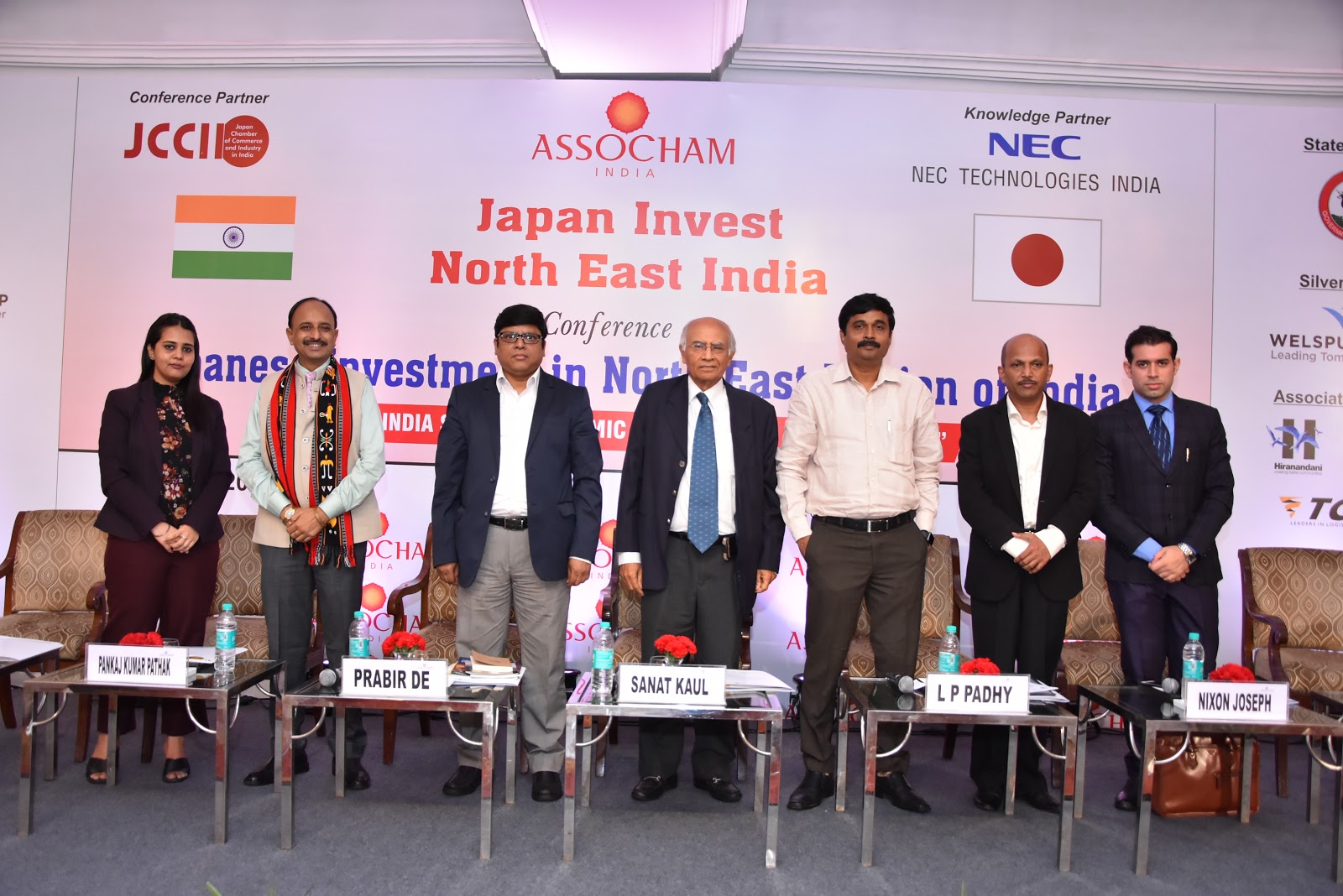
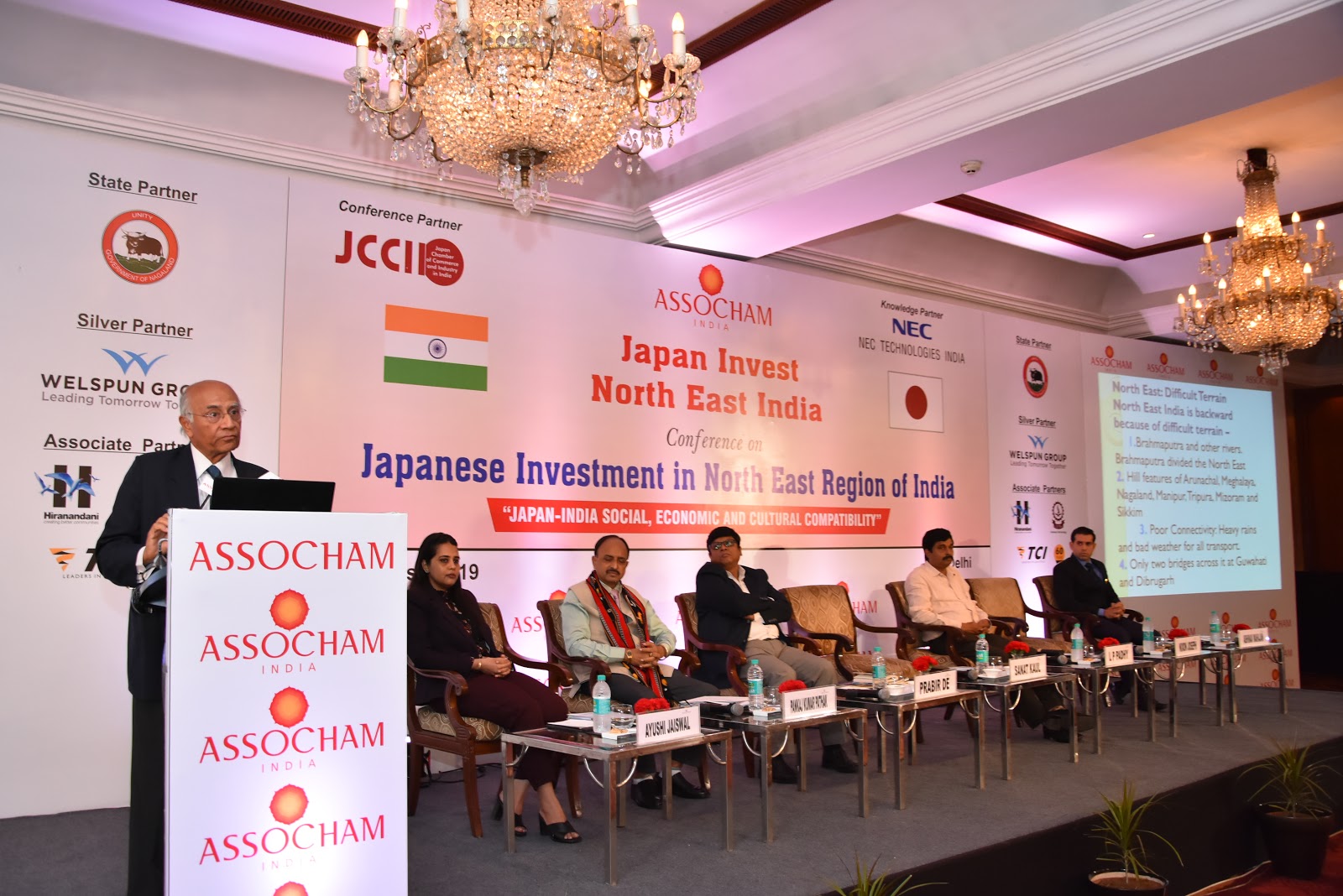
ASSOCHAM, NEW DELHI, JAPANESE INVESTMENT IN N.E. INDIA [8th AUGUST]

ASSOCHAM Conference on North East India & Japanese Investment on 8th August 2019
ISSUES OF AIR CONNECTIVITY
IN NORTH EAST INDIA. 

Wednesday, August 14, 2019

INTEGRATING AIR SPACE TRAFFIC MANAGEMENT FOR AVIATION AND NEAR SPACE

Integrating Air and Space Traffic Management:
By Dr Sanat Kaul; Published in the Journal of Space Safety Engineering
This paper will examine and show why it is now necessary for International Civil Aviation Organisation (ICAO) to take over Air and Near Space Traffic Management as technology is similar for both. Further it becomes obligatory for ICAO to do this and Outer Space Treaty of 1957 is silent on the issue of space traffic management.


Summit :JAPANESE INVESTMENT IN NORTH EAST REGION OF INDIA”, 8th August 2019.


Thursday, June 20, 2019

Let a pvt entity run Air India

THE flash strike by pilots of Air India has brought the airline back into national focus and once again for all the wrong reasons.


The tendency of Air India pilots to go on flash strike is an old one which has been allowed to become a habit as no strict action has ever been taken against them. This time the pilots of erstwhile Air India have gone on strike over training for the 29 new Dreamliner Boeing aircraft awaiting delivery as they do not want erstwhile Indian Airlines pilots to go through the same. While pilots the world over are a highly paid but unionised group prone to striking, Air India pilots take the cake as they have been declared ‘ workmen’ under the Workmen’s Compensation Act by court order.


Therefore, despite working on one of the highest paid jobs they enjoy the advantages of being workmen. Story The strike has been declared illegal and 26 pilots have been dismissed for the first time. How long this show of bravado from the government will last is anybody’s guess. Grapewine says the last time they went on a similar strike the Ministry of Civil Aviation proposed strong action, seeking to close down the airline temporarily but was not permitted by the PMO. Does this not sound logical in view of the fact that the Prime Minister, in an address to the nation from the ramparts of the Red Fort, has given an assurance that Air India would not be allowed to sink or close down? The result is there for everyone to see. Government coffers have been opened up for the airline, with a bailout package of Rs 30,000 crore over 9 years, Rs 4,700 crore of non- convertible debentures which are likely to be subscribed by government owned financial institutions and permission to go in for low cost external borrowings to the tune of $ 300 million ( over Rs 1500 crore). Already, Rs 3,200 crore of equity infusion has been done along with Rs 6,750 crore of working capital loan.


Will all this bring Air India back into the pink? Why did the merger of the two airlines done over four years back fail? These questions need to be examined to determine whether the existing government machinery has the will and capacity to turn around the ailing airline which was once a proud mascot of India.


To answer these questions we need to examine a bit of the past. A proposal to divest Air India was mooted in 2000 and by September 2001 it was a done deal in favour of a joint venture between the Tatas and Singapore Airlines with full support of all the Air India unions. However, two weeks before 9/ 11 took place in 2001, Singapore Airlines withdrew from the joint venture for reasons not disclosed though it is likely that they could not stomach Indian politics. Even as the Tatas were asked to look for another partner, 9/ 11 happened and no airline came forward to join the joint venture.


However, the point to note is that at that time the seven odd unions had joined hands to welcome privatisation — an unusual stand for unions to take— as they felt that their future was better off with the airline in private hands, notwithstanding the advantages of a secure government job. Therefore, they took a progressive stand. However, the decision to not privatise Air India and the subsequent one to merge it with Indian Airlines was not taken with their approval and shook the optimism of the unions which relapsed into their former trade union mindset.

The fact that an inspired merger from the top turned out to be a disaster is well documented. Not taking the pains to see through the merger, which requires a lot of delicate work, especially where many unions are involved, appears to be the main reason for the failure of the exercise.


Frequent changes in the top management was a signal that all was not well. Mismanagement and backseat driving without taking responsibility for decisions gone wrong at the top level have led to this disaster. 


Parallels: 
The turnaround of a sick company by highly recognised professionals has already occurred recently in India in the case of Satyam. Similarly, Japan Airlines was in deeper trouble than Air India but was turned around in a few years with a bailout package and is already making profit. In the US, financial failure gets resolved much quicker than elsewhere. The example of General Motors and Chrysler Motors which were turned around in about 40 days after filing for bankruptcy in 2009 highlights what quick decision making and close monitoring can do. Ford Motors refused a bailout and worked aggressively in foreign markets, emerging triumphant and regaining their investment grade rating. Air India, on the other hand, resisted an offer of help from the Board for Reconstruction of Public Enterprises on the ground that the company was less than three years old ( as a merged entity) and therefore beyond the scope of the Board’s assistance.


Solution

It, therefore, does appear that the government is lacking in commitment to change Air India’s fortunes. It is significant that notwithstanding the government largess, no major step has been taken to form a team, like was done in the case of Satyam, to turn the airline around. Under these circumstances where the government has not done anything significant other than pumping in taxpayers’ money into the airline, the only answer would be to hand it over to a private management as was done by Sri Lankan Airlines. They handed over the management of the government owned airline to Emirates Airline for a few years. The latter turned it around and have since handed back the management to the government of Sri Lanka.


The writer is Chairman of International Foundation of Aviation, Aerospace and Development ( India Chapter)


Jet faces big test in first brush with union trouble

For the first time in its 16-year history, Jet Airways (India) Ltd has found itself in a confrontation with unionized workers that analysts warn could potentially upset an ambitious restructuring plan and make it difficult for management to trim the airline’s 13,000-strong workforce in the future.
Jet, India’s largest airline by market value, has had an association of pilots called the Society for Welfare of Indian Pilots, or SWIP, to redress employee complaints since 1998, but unlike state-owned Air India, with 12 recognized unions swearing affiliations to political parties ranging from the right-wing Shiv Sena to the Left, it has never faced worker unrest or a strike threat. Until last week.

On 24 August, Jet Airways management received a 14-day legal notice from the airline’s newly formed pilots’ grouping, National Aviators Guild, or NAG, that all member pilots would begin a strike starting 7 September unless the Mumbai-based carrier reinstated two sacked pilots.

NAG, registered on 24 July, claims 650 members. It says the two pilots were terminated from employment because they were instrumental in forming the union, the first pilots’ association at a private Indian airline, which has not been recognized by Jet Airways management. Jet Airways and its wholly owned subsidiary JetLite have a total of 1,069 pilots on their rolls.

“It’s very sad that we have to take a step like this,” said NAG president Girish Kaushik. “I love the airline. It’s the most professional airline people will vouch for (it), and we want to keep it that way, but if two people are sacked without reason, it’s not acceptable. It takes years to become a professional pilot, how can you sack them like a daily wage labourer?” Jet, which operates at least 449 flights daily with a fleet of 107 aircraft, in May announced a “comprehensive cost restructuring” strategy which included a withdrawal from uneconomic routes, leasing out of wide-body aircraft to West Asian carriers, a freeze on hiring, temporary reduction of management pay and pruning of executive perks. The airline also said it would close international crew bases “and as a last but necessary measure” trim any excess workforce.

“If management has a free hand, then restructuring becomes an easy exercise. When they (employees) form a union, as a body their views cannot be ignored. The process becomes that much more complex,” said M.S. Balakrishnan, a former director of finance and board member of Indian Airlines (now Air India) who dealt with unions in his tenure before retiring in 2007.

Every time Jet has tried to sack employees, it has faced stiff resistance. In October it announced the sacking of 1,900 staff. The employees took to the streets and television images of the protests brought political intervention to end the standoff. Founder chairman Naresh Goyal went on television to say he was taking everyone back because he understood the “agony” they must have gone through.

“I can imagine because I started my career when I was 18, everybody knows I used to get Rs300 a month salary. I couldn’t sometimes get a meal. I can imagine what you (employees) must have gone through,” he said. The sackings were based on the economics of running an airline, he said, but he wanted to “go beyond numbers, figures and money”.

The numbers have not been on Jet’s side for some time. While it posted a profit for four of the seven fiscal years it has been listed on the Bombay Stock Exchange, the airline has been in the red since its takeover of erstwhile Air Sahara (now JetLite) in 2007. In the last fiscal, Jet lost Rs961.41 crore, 47.03% higher than in 2007-08, as it struggled with high operating costs, excess capacity and competition.

Jet started scheduled operations in 1993. SWIP, which claims the support of 790 Jet pilots on its website, was formed in 1998 with the “purpose of interfacing with the management to ensure a smooth and seamless operation of our airline”, and was meant to be “non-interfering and non-involving with the other departments”. NAG is different. It has the mandate to do what Kaushik terms “thought boxing”.
“Now, the SWIP is not a union at all. With this you cannot make an agreement (like on wages), you can’t sign anything. They don’t have a legal authority to do so,” Kaushik, who has 20,000 flying hours of experience, said. “The airline has told us in the past, ‘we don’t even need to speak with you’ (SWIP). This encouraged us to have a guild. It’s just to protect our interests.”

The next step for NAG is to become a member of the International Federation of Airline Pilots’ Associations a global pilots’ body representing at least 100,000 pilots in some 100 countries.

A senior SWIP member, who asked not to be named because he is not authorized to speak with the media, said a decision whether to dissolve the association will be taken over time. Jet Airways pilots need a union to protect their interests at a time when the aviation industry is trying to weather tough times, he said.

“SWIP is a welfare association representing the airline’s pilots and is recognized by the management of Jet Airways,” a Jet Airways spokeswoman said in reply to a Mint questionnaire. “For several years now, the management has held regular discussions with SWIP on various concerns and issues of interest to SWIP members and these discussions have also been the forum for redressal of grievances.”

Jet Airways has approached the regional labour commissioner in Mumbai for conciliation. On 27 August, the office of the deputy labour commissioner, central, under the ministry of labour and employment, said NAG cannot go on strike while conciliation proceedings are under way. Kaushik said the “strike was on” still and NAG will decide which way to lean after talks scheduled for Monday.

Analysts link the formation of the union to insecurity among employees stemming from the economic downturn and its impact on airlines. “They (employees) all felt that nothing could (go) wrong with Jet (for many years). They were riding high. But last year when Jet went into a tailspin, it put some insecurity in them,” said A. Ranganathan, an air safety consultant and a former general secretary of the erstwhile Indian Airlines’s pilots union, the Indian Commercial Pilots Association. “When you have a downturn and insecurity they know only a union can protect them.”

Jet’s employee base has more than doubled from 6,608 in 2004 to 13,078 as of March 2009, including several 160 expat pilots, and foreign executive hires at its international offices.

The restructuring exercise and possible job cuts may have been the trigger for Jet pilots to unionize, said another analyst.

“Most global companies have extremely strong unions. When you have such a large company...you expect that there would be unions,” said Kapil Kaul, India chief executive of consulting firm Centre for Asia Pacific Aviation. “Companies will have to deal with unions. Tomorrow you will have wage agreements with them.”

“For the employees, a union would offer a negotiating platform to bargain with the management on issues such as working conditions and career progression,” said Ranganathan.

Lalit Bhasin, a Supreme Court advocate and president of Society of Indian Law Firms, a grouping of the country’s top law firms, agrees. “The formation of (a) trade union is a welcome move as it leads to collective bargaining on the part of its members and gives them a sense of security,” he said.
But unions are also known to make aircraft lessors and insurance firms insecure because of concerns about possible sabotage. In the early 1990s, for example, leasing firms used to demand political risk insurance when leasing assets such as aircraft to airlines in India.

Kaul said he does not see leasing firms and insurance firms being wary of India now, given the country is an important market for them. “Most leasing firms deal with strong union cultures. The question appears only if there is a repeated labour dispute history of the airline. It maybe a factor but not an overwhelming factor,” he said. G.R. Gopinath, who started India’s first domestic low-cost airline, the erstwhile Air Deccan in 2003, said that unions gradually tend to become affiliated with some or the other political organization and invariably their leaders get into “power play and corruption”.

Kaushik says he is not keen to seek political backing. “So far as I am concerned we are not going for political affiliation. It’s going to mess up the whole airline, I am not for it. But my view is not the only one.” For now, NAG only wants the two sacked pilots to be reinstated. “My only agenda is to get the boys on board, we don’t want more salary or privileges. We will talk about other things later on.” Strike threat by newly formed pilots’ grouping may hurt the struggling carrier’s ambitious restructuring plans

400 Jet pilots go on sick leave
BS Reporter / New Delhi September 08, 2009, 1:15 IST

Around 400 Jet Airways pilots went on sick leave late Monday night. The decision was taken at a meeting of the National Aviators Guild (NAG) — a recently formed Jet Airways pilots’ union. The decision would come as a setback to the private airline, especially since NAG had earlier in the day called off their proposed strike from midnight of September 7.

The reason the strike was called off was that the conciliation meeting with the management was still on. Going ahead with the strike once the conciliatory procedure is on is illegal. However, during the day itself, pilots who are part of the guild said they would go ahead and protest in different ways, like going on leave. The union, which has the support of over 650 pilots, had called for an indefinite strike from the midnight of September 7. “We have called off the strike, as it will be illegal to go ahead with it. But our pilots are saying that they will hamper the services of the airline in different ways,” an NAG representative said. Later on, after midnight, the representative confirmed that around 400 pilots had gone on sick leave.

The Jet Airways spokesperson could not be contacted. Earlier in the day, the airline had maintained that it would “...follow the due process as indicated by the labour commissioner.”

The NAG is demanding the reinstatement of two pilots — Sam Thomas and G Balaraman — who, according to the guild, were terminated from services without any specific reason. The matter was referred to the labour commissioner who heard both the sides on August 31 and called them again on September 14.

Financial Express -- Jet pilots go on mass CL, operations hit
Agencies 
Posted: Tuesday, Sep 08, 2009 at 1234 hrs IST
Updated: Tuesday, Sep 08, 2009 at 1234 hrs IST

Mumbai: Jet Airways cancelled 115 flights scheduled for the day in view of its pilots going on mass casual leave to protest sacking of their two colleagues. 
"We have decided to cancel 115 flights of our total 345 flights in the day in view of pilots going on mass casual leave," Jet Airways spokesperson said. 

Last month, the airline had sacked two of its seniormost pilots Captain Sam Thomas and Captain Balaraman saying their services were not required after they, along with other pilots, formed a trade union body, National Aviators Guild. 

The union gave a strike call on September 7 to protest the sacking.  The issue was referred to the Regional Labour Commissioner for conciliation.  The commissioner conducted the first conciliation proceedings between the management and union on August 31 and advised both the parties to adhere to the Industrial Dispute Act of 1947. It said that since the matter was under conciliation, Jet pilots were legally bound to not to go on a strike. Though the pilots withdrew the strike call yesterday as a part of their strategy, they decided to go on mass casual leave. 

The Guild claims representation of 645 pilots of the total over 1000 pilots in Jet Airways. 
Financial Express -- Jet strike: govt may invoke Esma
Posted: Wednesday, Sep 09, 2009 at 0101 hrs IST
Updated: Wednesday, Sep 09, 2009 at 0101 hrs IS

Mumbai: Flight schedules across the country were severely disrupted as almost half the 760 pilots belonging to Jet Airways took mass sick leave and struck work on Tuesday in protest against the sacking of two of their colleagues. 

By evening, the company had sacked three more pilots, even as their representatives were huddled in a meeting with director general of civil aviation Nasim Zaidi to explain their position. The home ministry has threatened to use sections of the Essential Services Maintenance Act to force pilots back to work, even as the standoff is expected to continue into Wednesday. 

As a result of the action, India’s largest airline by marketshare said 186 of its flights were cancelled, including 32 international flights, affecting 13,000 passengers. The airline scrambled to combine some flights and accommodate passengers on other carriers to counter what a Jet spokesman described as “an organised and planned sabotage of operations”. Civil aviation ministry secretary Madhavan Nambiar said Jet has been told to ensure full refund to passengers whose flights were cancelled. “We have directed (Jet’s) management to talk to the agitating pilots and put in place a mechanism to ensure such strikes are resolved timely in the future,” he added. Jet Airways chairman Naresh Goyal met Nambiar and Zaidi twice on Tuesday to brief them on steps being taken to deal with the crisis. 

The airline, which reported a loss of Rs 225 crore for the first quarter of the current financial year, is estimated to have lost over Rs 10 crore on Tuesday owing to the cancellation of flights. Jet has a fleet of 107 aircraft flying to 449 destinations daily. Up to noon, only a quarter of these flights operated normally, a Jet Airways statement said. The agitating pilots, who belong to the recently formed National Aviators’ Guild (NAG), are protesting the sacking of colleagues for their alleged role in forming the new union. The airline, however, has refused to acknowledge the demands. 
“The pilots resorted to a simulated strike by reporting sick. Since 10 pm last night, a total of 163 captains and 198 first officers reported sick, disrupting the flight schedule and causing inconvenience to the travelling public,” the company said.  Jet Airways has also threatened appropriate action on obtaining a high court order restraining NAG and its members from resorting to industrial action. Pilots also opted for mass sick leave instead of a formal strike fearing action by the regional labour commissioner, who has such action illegal under the Industrial Disputes Act. Jet Airways’ shares ended Tuesday at Rs 262, up 2.64%, on the BSE as a resolution to the crisis seemed close at hand. 

Financial Express -- Jet sets up crisis centre, keeping fliers updated
Agencies 
Posted: Wednesday, Sep 09, 2009 at 1509 hrs IST
Updated: Wednesday, Sep 09, 2009 at 1509 hrs IST
Mumbai: Jet Airways on Wednesday said it was making all efforts to ensure that the passengers do not face inconvenience due to the protest by the airline pilots that has disrupted its domestic and international operations.  Jet Airways Chief Commercial Officer Sudheer Raghavan said the airline has re-accommodated 80 per cent of its stranded passengers on flights of other airlines, while they have “readily” refunded the airfare of the remaining ones. 

“We have set up a crisis centre and are updating our website on a real time basis. We are also sending SMS updates informing them which flights are operational and which have been cancelled, so that passengers don’t have to come to the airport and face inconvenience,” Raghavan said. 
Over 350 pilots of the Naresh Goyal-led airline went on mass sick leave since yesterday protesting the sacking of two senior pilots in July.  About 186 flights, both domestic and international, were cancelled yesterday, while Jet has so far called off 153 flights for today.  “We are sorry that some of our passengers have had to face trouble. It has been a surprise spring on us without any early warning,” Raghavan said. 
About 13,000 passengers were yesterday left stranded at various airports across the country, the worst affected being Mumbai airport. 

Jet Airways Chairman, Naresh Goyal, has appealed to the pilots to resolve the matter amicably and return to work.  

Financial Express -- Jet extends olive branch, open for talks with pilots
Agencies 
Posted: Wednesday, Sep 09, 2009 at 2025 hrs IST
Updated: Wednesday, Sep 09, 2009 at 2025 hrs IST

Mumbai: Jet Airways on Wednesday said its doors were open for talks with the agitating pilots who continued to stay away from duty crippling the airline's services for the second day. 
"Doors are open... we will be sitting together," Jet Airways Chief Commercial Officer Sudheer Raghavan told reporters here. Asked if it was true that the two pilots sacked last month were not given any valid reason for the management's action, he said Jet had "not gone out of the legal framework." 
The sacking of the two pilots for allegedly trying to form an union sparked off an agitation that paralysed the airline's domestic and international flights since Tuesday. About 400 domestic and international flights of Jet Airways have been cancelled in the last two days resulting in over 14,000 passengers being stranded at various airports. Raghavan said the airline's domestic bookings had plummeted to 14,000 per day from 23,000 on normal days, in the wake of its pilots going on a mass sick leave. 
However, the impact on the international bookings was less as the company retained 9,500 bookings against 10,500 it has on normal days. "We are able to carry 50 per cent of our passengers on Jet Airways and JetLite flights, while the remaining are being transferred to other airlines," Raghavan said. 
Fares soar as airlines chip in to help Jet

BS Reporter / New Delhi September 10, 2009, 0:07 IST

The second day of the Jet Airways pilot protest saw the Bombay High Court issuing a contempt notice to pilots, fares soar and the airline industry putting its support behind the airline's management by taking up the slack of the 250 flights (above 500 domestic and international) that were grounded today after more than 400 pilots took mass sick leave for the second day in protest against two pilots sacked last month and three yesterday A release from the airline said the the Bombay High Court issued a notice to the National Aviator’s Guild (NAG) and its office bearers and made the matter returnable on September 14.Meanwhile, the pilots of the NAG, which has 650 members out of Jet’s 704 pilots (another 164 are expats and are not part of this protest), also declared that they were willing to talk to the management to resolve the issue. “Once Mr Goyal meets us, I am sure he will be able to understand our problems,” NAG joint secretary Captain Sam Thomas told reporters.
 
But late night talks between the Jet management and pilots ended in a stalemate.
In a day of hectic developments, Jet Airways Chairman Naresh Goyal met Civil Aviation Minister Praful Patel, and also worked out a plan to reduce inconvenience to passengers. “On normal days, we fly 23,000 passengers. As of today we have 14,000 passengers booked, of which 50 per cent would be boarded on JetLite and Jet Airways flights and the rest were accommodated with other airlines,” said Hamid Ali chief operating officer of Jet Airways, which is India’s largest airline.Airlines like Air India, Kingfisher, IndiGo and SpiceJet are picking up Jet passengers from grounded flights and the airline has also worked out inter-airline payment adjustments so that passengers do not have to pay extra for flights redirected to other airlines.

Fares available on the net, however, shot up 50 to 100 per cent during peak hours owing to the sudden reduction of capacity due to cancelled flights. “Except for Air India, low-cost carriers have raised fares 50 per cent and full-service carriers by around 100 per cent,” confirmed Mohit Srivastava, head of online sales, MakemyTrip.com, an online portal. On a Delhi-Bangalore route, Kingfisher normally charges Rs 6,000 (one way). The fare today rose to Rs 12,500. Low-cost carriers have upped Delhi-Bangalore ticket prices from Rs 3,000 to Rs 4,500, according to makemytrip data (see table).

Sources in Kingfisher admitted that the Vijay Mallya-owned airline was getting 100 per cent passenger load factor (PLF) in the business class currently instead of the average of 50 per cent. Air India saw passenger load factor increase from 60 per cent to 74 per cent today.

Significantly, both full-service and low-cost carriers have strongly supported Goyal.
“We cannot tolerate labour terrorism by employees who get salaries above Rs 4 lakh a month,” said a senior executive of a leading private airline, adding, “Also, at a time of recession for the industry we are concerned that the pilots’ attitude might spread to other airlines too. At this moment everyone has to make sacrifices.”

“Goyal has not budged an inch and that is the right way. We fully support his moves. I don’t see the pilots getting support from any other employees who distrust them,” added a CEO of a low-cost carrier.
NAG’s Thomas, however, made it clear that the mass leave move will continue till their demands of reinstating all the pilots sacked is met. Jet Airways has a 26.3 per cent — 18.9 per cent of Jet Airways and 7.4 per cent of JetLite — share of the domestic passenger market that carries 100,000 passengers a day.

Mint -- Jet, pilots fail to break impasse
B Y P .R . S ANJAI, Sept 10
MUMBAI
India's largest carrier by market value Jet Airway (India) Ltd cancelled about half its flights for a second day on Wednesday, as pilots failed to reach a compromise with the management on ending a dispute that sparked an undeclared strike, with aviators going on sick leave en masse. Flights are set to be cancelled on Thursday as well amid the crisis that's causing daily losses of about $4 million (Rs19.4 crore). Other airlines benefited, with some same-day fares registering a sharp increase.
The Bombay high court issued a contempt notice to the pilots' union of Jet Airways for continuing the strike despite a retraining order issued on Tuesday.

The carrier's domestic bookings dropped to 14,000 from 23,000, while international bookings fell by 1,000 from 10,500. On Wednesday, Jet Airways cancelled 32 international flights and 134 domestic flights after 432 pilots out of a total 760 reported sick.

Although the management and the National Aviators' Guild (NAG) have said they are open to talks, no formal discussions have been scheduled nor has a time frame been set to resolve the dispute.
"This will have far-reaching repercussions" for Jet's finances, said a senior executive at the airline on condition of anonymity. "It will not be able to pay salaries in September on time if the strike continues.
This will also have an impact on payments to vendors." Chief operating officer Hameed Ali said pilots will have to furnish a medical certificate to extend sick leave beyond 48 hours. Pilot Suhail Jain was fired on Tuesday for refusing to let Jet's doctors examine him at his residence.

Mint could not immediately independently confirm whether the firing was legal. Under the terms of conciliation talks undertaken by the labour commissioner's office, the airline cannot fire anyone until negotiations are concluded.

NAG president Girish Kaushik and Jet Airways founder-chairman Naresh Goyal are in New Delhi, meeting officials as the stir intensifies. Kaushik is trying to gain support from political parties and other unions while Goyal is asking the government to intervene by invoking the Essential Services Maintenance Act, according to a person close to the development, who declined to be named. "We are talking to pilots to find an amicable solution to this issue. We are ready to listen and our doors are open," Ali said.
The airline didn't say if it had a strategy in place for dealing with the continuation of the dispute. "The situation is extremely fluid and we will dynamically address challenges," said chief commercial officer Sudheer Raghavan. "We have opened a crisis centre to disseminate information to customers as fast as possible.

We are sending out SMSes and accommodating passengers on other flights." He said Jet has prepared a contingency plan, to be reviewed every hour based on the number of pilots reporting for work.
NAG joint secretary Sam Thomas said the union had not received any communication for talks to resolve the issue.

"Our demand is just to reinstate the retrenched pilots. For that we are ready to fight as long as it takes."
Thomas is one of two pilots--the other is D. Balaraman--fired in August for forming the union, the immediate trigger for the current standoff. Both claim the management has not given them any reason for the retrenchment.

Raghavan said his airline is willing to sit across the table and talk but "pilots cannot blackmail the carrier by resorting to such a mass leave".

Pilots of JetLite (India) Ltd, the low-fare carrier of Jet Airways, have not joined the labour action. That may change, Thomas said. "In spirit, JetLite pilots have said that they will support us," he said. "We have got feelers from others unions in Jet Airways including cabin crew and ground staff." The dispute stems from the better treatment of foreign pilots, Jain said. "We were always willing to take a pay cut, but all that we want is it should be equal across the board," said Thomas, adding that Indian pilots took a pay cut in December. "Expat pilots are enjoying all benefits while we were asked to take a pay cut.
We need to be first-class citizens, at least in our country." Jet pilots formed an association in 1998 to look into issues such as salaries, allowances and flying hours. It was not a labour union and Jet Airways had signed at least two wage agreements with it. Later, Jet Airways refused to negotiate with it, leading to the formation of NAG in July. PTI contributed to this story.